Your next patient asks an AI which clinic to choose, long before they book.
People considering private treatment now describe the problem to ChatGPT, Gemini, Perplexity or Google’s AI results first. They ask what their options are, which clinics offer that treatment nearby, and what other patients say about them. By the time someone calls reception or opens your booking page, a shortlist has already been made. High 5 Guru helps UK private clinics and healthcare providers become visible, correctly understood and credibly evidenced inside those answers, so your clinic is one of the few names that appears.
- ChatGPT
- Google AI Overviews
- Gemini
- Perplexity
- Google Search
- Measured, not guessed
- Built around your treatments and locations
- No guarantees, no invented claims
Optional supporting service: once enquiries increase, we can also build custom AI workflows that organise them and draft replies for your team to approve. Non-clinical administration only.

The patient asks an AI assistant first. Your clinic is judged before the phone rings.
Choosing private healthcare has always started with a worry and a search. What has changed is where that search happens. Instead of scrolling through ten blue links, prospective patients now hold a conversation with an AI assistant, and that conversation covers the options, the shortlist and the reputation check in one sitting.
-
They ask the AI about the problem, not for a website
“I have had knee pain for three months and my GP appointment is weeks away. What are my options?” The assistant explains in general terms what kind of clinician or service to look for. Your clinic is not involved in this step, but the words the patient now carries into the next question are.
-
They ask which clinics to use
“Which private physiotherapy clinics near Harrow can see me this week?” The answer is a short list of names, often with a sentence explaining each one. Clinics that are not named at this moment are not rejected. They are simply never considered.
-
They check the reputation of the clinics named
“What do patients say about this clinic? Is it registered with the CQC?” Patient reviews, regulator records, clinician registrations, directory profiles, published prices and press mentions are pulled into a summary the patient reads in seconds. Thin, inconsistent or contradictory evidence shows immediately, and so does a clinic with none at all.
-
Only then do they call or book
By the time someone phones reception or opens your booking page, they have usually narrowed the field to one to three clinics and already believe something specific about each of them. The competition happened earlier, inside an answer your clinic never saw.

Why an AI assistant names one clinic and not another
An AI assistant does not rank clinics the way a search engine ranks pages. It assembles an answer from what it can identify, retrieve and verify about each clinic. Being named requires all three: the system must know your clinic exists as a distinct entity, be able to retrieve content that answers the question, and find independent evidence that supports what your clinic says about itself. Miss one layer and the clinic quietly drops out of the answer.
This is broader than rankings, map listings or backlinks. We work across three layers, and the audit tells you which of them is currently letting your clinic down:

Entity understanding
Can AI systems clearly identify the clinic, its clinicians, treatments and locations, and are those facts consistent everywhere they appear?
Retrieval readiness
Can the clinic’s content be found, interpreted and used in relevant answers: clear treatment pages, prices, opening hours, structured data and well-organised information?
Authority and evidence
Do credible independent sources (patient reviews, regulator registers, professional bodies, directories and consistent facts) support what the clinic says about itself?
The questions patients ask an AI assistant before they ask you
These fall into three groups, and prospective patients move through them in order: questions about the problem, questions asking which clinics to use, and questions checking whether those clinics can be trusted. The commercial question for your clinic is simple: when these prompts are asked, does the available evidence point to you?

1. Advice-seeking: the patient is working out what they need
2. Shortlisting: the patient is asking which clinics to use
3. Reputation checking: the patient is verifying the shortlist
These are example research prompts showing how prospective patients use AI tools. They are not current rankings, and not a promise of inclusion in any AI answer. Your audit benchmarks the specific prompts that matter to your treatments and locations, and records what each platform currently says.
The Clinic AI Visibility Audit: measure first, recommend second
Everything starts with evidence. The audit establishes where your clinic currently appears, what AI systems understand about it, and which improvements are most commercially valuable. We review:
- Important patient search questions
- Current AI mentions and citations
- Treatment and service visibility
- Local and catchment-area visibility
- Brand and entity consistency
- Website structure
- Treatment-page clarity
- Clinician profiles and registrations
- Structured data
- Reviews and reputation signals
- Healthcare directories and regulator listings
- Digital PR and third-party references
- Content gaps
- Pricing and booking information
- Technical accessibility
- Competitor visibility
- Measurement and reporting
Find out what AI systems currently say, and don’t say, about your clinic.
The audit benchmarks your visibility across commercially valuable patient prompts and shows exactly where to improve.
Generative engine optimisation for private healthcare, done properly
No agency can guarantee what an AI platform recommends, and you should be wary of any that claims otherwise. What we can do is strengthen every signal those systems rely on, and measure the result.

AI visibility benchmarking
Measure whether and how the clinic appears for important prompts across AI platforms. This is your baseline before any work begins.
Patient prompt and demand research
Identify the questions prospective patients actually ask while researching and choosing, mapped to your treatments and locations.
Entity optimisation
Strengthen the connections between the clinic, its clinicians, treatments, locations and external references, so AI systems know exactly who you are.
AI-ready treatment content
Create and improve clear, factual treatment and condition pages that answer systems can understand and retrieve, each one reviewed by your clinicians before it is published.
Structured data and technical clarity
Improve schema markup for the clinic, its clinicians and its treatments, along with page structure, metadata and technical accessibility, so machines can parse what your pages say.
Third-party authority
Develop legitimate citations, expert contributions, directory and professional-body profiles and media opportunities: the evidence AI systems weigh.
Reviews and reputation signals
Improve the consistency and usefulness of genuine patient reviews across the platforms AI systems read. We never write, buy or incentivise reviews.
AI visibility monitoring
Track mentions, citations, competitor movement and changes over time, so progress is measured rather than assumed.
And when the enquiries start arriving
Visibility is the service. Everything from here is optional: a supporting workstream some clinics add once AI visibility work starts producing more enquiries. Skip to booking the visibility audit if that is all you need today.
Being named by an AI assistant puts more people in front of your front desk. That is the objective, but it raises a practical question: what happens when those enquiries arrive? Clinics handling more first contacts tend to need:
- A consistent first response, whoever is on reception
- Fast routing to the right service or clinician’s diary
- Clear ownership of every new enquiry
- Proper follow-up when a patient has not replied
- Human approval before anything is sent to a patient
- Less administrative pressure on reception and clinical staff

Optional: automate the non-clinical admin behind the enquiries you win
This is a supporting service, not the main engagement. Most clinics begin with AI visibility alone and add automation later, if at all. It covers administration only: the workflow does not triage, diagnose or give medical advice.
For clinics that want it, High 5 Guru builds custom AI workflows that support your front-of-house team behind the scenes. Configured around your clinic’s own rules, never a generic chatbot, a workflow can:
- Monitor approved enquiry channels and shared inboxes
- Sort enquiries by treatment or service requested
- Extract contact details, preferred times and the service asked about
- Route enquiries to the right team or diary
- Prepare structured internal summaries
- Draft acknowledgement emails from approved templates
- Request missing administrative information
- Create follow-up reminders automatically
- Escalate anything clinical, urgent or sensitive to a named person
- Require human approval before anything is sent to a patient

- Enquiry received
- Service identified
- Key details extracted
- Right team selected
- Reply and task drafted
- Human review before sending
- Dental
- Dermatology
- Physiotherapy
- Private GP
How much administrative capacity could your clinic recover?
Every new enquiry is read, forwarded, acknowledged, chased and logged by someone on your team. This calculator gives a rough estimate of that time and of how much could be recovered. Actual results depend on enquiry volume, workflow complexity, integrations and approval requirements, and are estimated properly during the audit.
Estimate your clinic’s recoverable admin time
Adjust the figures to match your clinic. Defaults are illustrative starting points, not benchmarks.
Your estimate
These figures are estimates for discussion only, not guarantees or a quotation. They assume the automated portion of each enquiry’s administration is removed; actual results depend on your processes, systems, integrations and approval rules, and are assessed properly during the audit.

AI supports your team. It does not make clinical decisions.
Healthcare runs on trust, and patient information is among the most sensitive data there is. Every workflow is designed around your clinic’s approved processes, access rules and human-review requirements, with the controls designed in from the start:
- Mandatory human review before anything is sent to a patient
- No clinical decisions: the workflow does not triage, diagnose or give treatment advice
- Role-based permissions and restricted system access
- Data minimisation: the workflow touches only what it needs
- Approved templates, escalation rules and manual override
- Audit trails recording what was read, drafted, approved and sent
- Supplier due diligence and data-processing agreements where appropriate
- Testing with synthetic data before any live patient data, with a DPIA where appropriate
Health content is held to a higher standard
The same care applies to the visibility work. Pages about conditions and treatments are reviewed and approved by a named, registered clinician at your clinic before they are published. We do not write outcome guarantees or claims that cannot be substantiated, we do not create or solicit fake reviews, and we work within UK advertising rules for health services, including the restriction on advertising prescription-only medicines to the public.
How the work runs: visibility first, automation only if you want it
Every stage is labelled so you can see which parts build your clinic’s AI visibility and which belong to the optional automation track. Stages 1 to 4 and 7 are the core visibility programme; stage 5 only happens if you choose to add automation. Nothing goes live without discovery and testing.

-
Visibility and workflow discovery Both
Understand your treatments, locations, ideal patients and current marketing, and how enquiries currently flow through inboxes, phones, people and systems.
-
Patient-prompt and competitor research Visibility
Identify the commercially valuable questions prospective patients ask AI systems, and benchmark your visibility against competing clinics for those prompts.
-
Entity, content and technical audit Visibility
Review entity consistency, treatment pages, clinician profiles, structured data, directories, regulator listings, reviews, citations and technical accessibility.
-
AI visibility strategy Visibility
A prioritised, evidence-led plan: what to fix, create and strengthen first, mapped to the prompts and treatments that matter commercially.
-
Automation opportunity assessment Automation
Estimate realistic time savings, identify where patient data is involved, and design the approval and escalation rules for any workflow.
-
Controlled implementation and testing Both
Publish content and entity improvements progressively, with clinician sign-off; prototype automation with synthetic data, test with staff, then launch gradually.
-
Monitoring and continuous improvement Both
Track AI mentions, citations and competitor movement; monitor workflow accuracy and time savings; refine both tracks using approved feedback.

Be named in the answer, and be ready for the patient who acts on it
The primary outcome is visibility: your clinic named, understood and credibly evidenced when a prospective patient asks an AI which clinic to choose. If you also add the optional automation track, your team can respond consistently without losing the human contact patients expect. Together, the aim is:
- More of the right patients discovering the clinic
- A clearer picture of what the clinic treats and who treats it
- Stronger supporting evidence across the web
- More consistent responses to new enquiries
- Less administrative pressure on reception
- More clinician time for patients
Razvan Calarasu, MBA: Founder, High 5 Guru
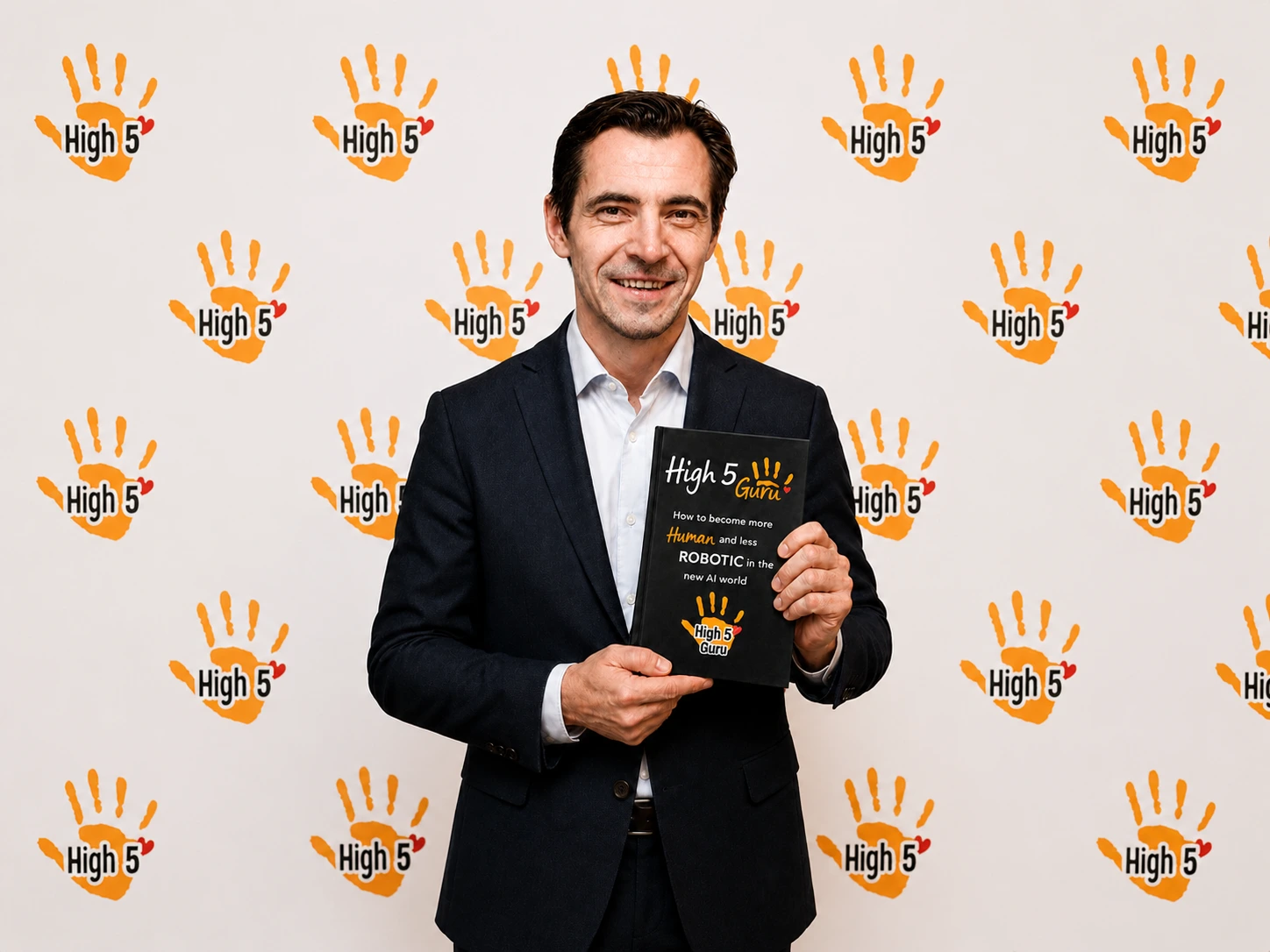
Razvan is an AI visibility strategist and founder of High 5 Guru, with 15 years in search and digital strategy. He works directly with founders and leadership teams in trust-based sectors, including healthcare, legal services and cybersecurity, helping brands appear in ChatGPT, Gemini and Google AI results, and turning AI into practical business outcomes.
- MBA
- 15 years in search & digital strategy
- UK based, working across the EU
- Focus sectors: healthcare, legal, cybersecurity & IT
His approach for regulated sectors is deliberately conservative: measure first, strengthen the evidence, and keep humans in control of every sensitive step. As he puts it, “people will always choose people”. Visibility and automation exist to give your people more time to be exactly that.
Razvan is also the author of How to Be More Human and Less Robotic in the New AI World, on keeping brands and professional relationships human as AI reshapes how people find and choose who to trust.
Dental Wellness, a dental practice in Stanmore, north-west London, rated 4.9 out of 5 on Google from more than 900 patient reviews.
Rating and review count as shown on Google, October 2026.Request a Clinic AI Visibility Audit
Tell us about your clinic, its priorities and its biggest bottleneck. We review your answers before the call, so the conversation starts with your clinic’s visibility and workflows, not a sales pitch.
Please do not include any patient information in this form. Your details are used only to respond to your enquiry and prepare your audit. They are never sold or shared for marketing. Read our privacy policy.
Frequently asked questions
What is AI visibility for a clinic?
AI visibility is the ability of AI-powered systems such as ChatGPT, Gemini, Perplexity and Google’s AI results to correctly identify your clinic, understand its treatments, associate it with the right services and locations, retrieve its content for relevant questions, reference credible evidence about it, and recommend it when the available evidence supports that recommendation.
Do patients really use ChatGPT to choose a clinic?
A growing number of people start with an AI assistant when they are considering private treatment. A typical sequence is: describe the problem and ask what the options are, ask which clinics offer that treatment nearby, then ask what those clinics’ reputations look like (reviews, clinician qualifications, regulator records and prices) before contacting one to three shortlisted clinics.
Usage varies by age group and treatment type, so we measure what is actually happening for your treatments and catchment area rather than quoting a headline statistic. That measurement is the first part of the audit.
How is AI visibility different from traditional SEO or local SEO?
Traditional and local SEO focus on ranking pages and map listings in search results. AI visibility is broader: it concerns whether AI systems can understand the clinic as an entity, retrieve and use its content in generated answers, and find consistent third-party evidence supporting its expertise. The two complement each other, but AI visibility needs additional work on entities, structured data, content clarity and external citations.
Can you guarantee that an AI platform will recommend our clinic?
No, and no consultancy can. AI platforms generate answers from their own models and evidence, and nobody outside those companies controls the output. What can be done is to measure your current visibility, strengthen your entity signals, content and third-party evidence, and increase the likelihood of being retrieved and referenced for relevant questions. Progress is measured openly so you can see the movement.
Which patient questions should we target?
That is established through patient prompt and demand research: identifying the commercially valuable questions prospective patients ask while researching and choosing, mapped to your treatments, locations and patient groups. The audit then benchmarks your clinic’s current presence for those prompts.
How do you measure AI visibility?
By benchmarking a defined set of commercially relevant prompts across AI platforms, recording whether and how your clinic is mentioned or cited, tracking competitor visibility for the same prompts, and repeating the measurement over time to show movement.
Does our clinic need new content?
Not necessarily. The audit identifies whether the priority is improving existing pages, adding structured data, clarifying treatment and clinician pages, or filling genuine content gaps. Recommendations are evidence-led rather than volume-led. More content is not automatically better content.
Who checks the accuracy of health content?
Your clinicians do. High 5 Guru researches, drafts and structures content, but every page about a condition or treatment is reviewed and approved by a named, registered clinician at your clinic before it is published. We do not publish outcome guarantees or claims that cannot be substantiated, and we work within UK advertising rules for health services, including the restriction on advertising prescription-only medicines to the public.
Can you improve the visibility of individual clinicians?
Yes. Clinician profiles are part of entity optimisation: setting out each clinician’s qualifications, professional registration, special interests, memberships and published work so AI systems can associate the right people with the right treatments. This also strengthens the clinic’s overall authority signals.
Can you help with local and treatment-specific visibility?
Yes. Visibility work is mapped to specific treatments and clinic locations, so the clinic becomes associated with the services it offers in the places it serves, for example dental implants in a specific town, or private dermatology across a city.
Do patient reviews affect whether AI recommends a clinic?
Reviews are one of the sources AI assistants summarise when someone asks about a clinic’s reputation, alongside regulator records and directory profiles. We help you collect genuine reviews consistently, keep your profiles accurate and respond to feedback well. We never write, buy or incentivise reviews.
What does the automation system do?
A custom AI workflow can monitor approved enquiry channels, sort enquiries by treatment or service, extract contact details and preferred times, route enquiries to the right team, prepare internal summaries, draft acknowledgement emails, request missing administrative information, create follow-up reminders and escalate anything clinical or urgent to a named person. It handles non-clinical administration only: it does not triage, diagnose or give medical advice.
Will AI contact patients without approval?
Not unless your clinic chooses that. Workflows are typically designed so that messages to patients are drafted by the assistant and released only after a named person approves them. Internal routing and labelling can run automatically where your clinic is comfortable with it. The approval boundaries are yours to set.
How is patient information protected?
Every automation project starts with a workflow and data-risk review covering confidentiality, UK GDPR (health information is special category data), data minimisation, access controls, where data is processed and stored, logging and supplier due diligence. Testing uses synthetic information before any live patient data is involved, and final governance decisions remain with your clinic and its advisers.
Can the system connect with our booking or practice-management software?
Workflows are commonly designed around Microsoft 365 (Outlook) and Google Workspace (Gmail). Where your booking or practice-management system offers a supported integration method such as an API, integration is assessed during the audit. If direct integration is not practical, structured summaries and tasks can still be delivered in other approved ways.
Will AI replace our reception team?
The systems are designed to remove repetitive email handling, not people. In practice, clinics redirect recovered time towards answering the phone, looking after the patients in front of them and reducing backlogs. Your team stays in control of every workflow.
How long does implementation take?
Visibility work typically begins producing improvements over a period of months as content, entity and authority signals strengthen. Automation projects move through discovery, risk assessment, prototyping with sample data, staff testing and a controlled launch. Timescales depend on scope and are confirmed after the audit.
Can we begin with an audit only?
Yes. The Clinic AI Visibility Audit is a standalone piece of work with its own findings and recommendations. Many clinics use it to decide internally what to prioritise. There is no obligation to continue beyond it.
Does High 5 Guru provide medical or regulatory advice?
No. High 5 Guru provides technology and marketing consultancy, not medical, legal or regulatory advice. Each clinic remains responsible for its regulatory, professional, confidentiality and data-protection obligations and for the accuracy of its clinical content. Our systems are designed to support, never replace, the professional judgement of your clinicians.
Be the clinic the AI names
The audit shows where your clinic stands in AI answers today, what to strengthen first, and how much administrative capacity your team could realistically recover. If the timing isn’t right, the audit will tell you that too.
High 5 Guru · info@high5guru.com · +44 20 8150 4242 · www.high5guru.com