

By Razvan Calarasu, Founder of High5Guru · Last updated June 2026 · Reading time: ~17 minutes
Quick answer. AI Search Optimization for B2B & Cybersecurity Brands. B2B and cybersecurity buyers now research vendors inside AI engines before visiting any website by 2026 around 94% of B2B buyers use AI in their purchase process, and a Forrester survey of nearly 18,000 buyers found generative AI has become the single most meaningful source of vendor research, outranking vendor websites, product experts and sales reps. Yet roughly 73% of cybersecurity vendors receive zero ChatGPT citations when buyers ask for recommendations in their category. AI search optimization for B2B closes that gap through citation first technical content, proprietary benchmark data, rigorous entity and trust signals, and systematic earned media because over 85% of AI citations come from earned media, not brand owned pages.
For B2B and cybersecurity brands that want AI visibility to become measurable business growth, this playbook should connect with sales performance, a stronger lead generation system, and a practical AI SEO strategy.
A CISO opens ChatGPT and types: “Design a complete security stack for a 500 person SaaS company with a $500K annual budget that needs SOC 2 compliance and integrates with our Microsoft environment.” In one response, the AI names five to eight vendors, explains where each fits, and effectively builds the shortlist. The buyer has not visited a single vendor website. They have not spoken to a single sales rep. And every vendor not named in that answer has already lost silently, before the evaluation even began.
This is not a hypothetical. It is the documented, dominant behaviour of senior security and technology buyers in 2026, and it represents the most significant change to B2B technology buying since Google search itself. The funnel has collapsed: awareness, consideration and shortlisting now happen inside a single AI interaction. For the brands named in the answer, it is the highest quality pipeline they have ever seen. For everyone else, it is invisible and most B2B and cybersecurity brands are firmly in the second group.
This playbook is written specifically for B2B technology and cybersecurity brands for CISOs and IT directors evaluating the shift, and for the marketing leaders, founders and MSP owners who have to respond to it. It covers why your buyers moved, the trust problem unique to security in AI search, a four phase playbook to become citable, and how to measure pipeline impact. The data throughout is drawn from 2026 research; the strategic judgement is High 5 Guru’s.
In a single AI answer, the shortlist is built and the losers are eliminated without a website visit or a sales call. Being absent from that answer is not a marketing inconvenience. It is a pipeline that never forms.
Why B2B Buyers Now Start in AI, Not Google
The migration is not gradual or speculative. It is measured, large, and accelerating and it concentrates exactly where high value technology deals live.
The numbers behind the shift
Adoption is now near universal: the proportion of B2B buyers using AI in their purchase process rose from around 89% in 2025 to roughly 94% in 2026. More striking is the rank of the channel. Forrester’s 2026 Buyers’ Journey Survey of nearly 18,000 business buyers found that twice as many named generative AI or conversational search as their most meaningful research source compared with any other outranking vendor websites, product experts and sales representatives. Over half of B2B software buyers now say they start research with an AI chatbot more often than with Google. The first impression of your brand, your category and your competitors is increasingly formed inside an AI answer.
AI as the new B2B gatekeeper
Because so much of the journey completes before human contact Forrester has long put the share of the buying journey finished before a buyer contacts a vendor above 60%, and AI synthesis pushes it higher; the AI engine functions as a gatekeeper. It decides which vendors enter the consideration set. G2’s 2026 research found buyers rank AI chatbots as the number one source influencing their shortlist, and that around 69% reported AI surfaced information that led them to choose a different vendor than they had expected. Your content is now doing the selling during an invisible research phase you never see and cannot attend.
The cybersecurity buyer’s distinctive behaviour
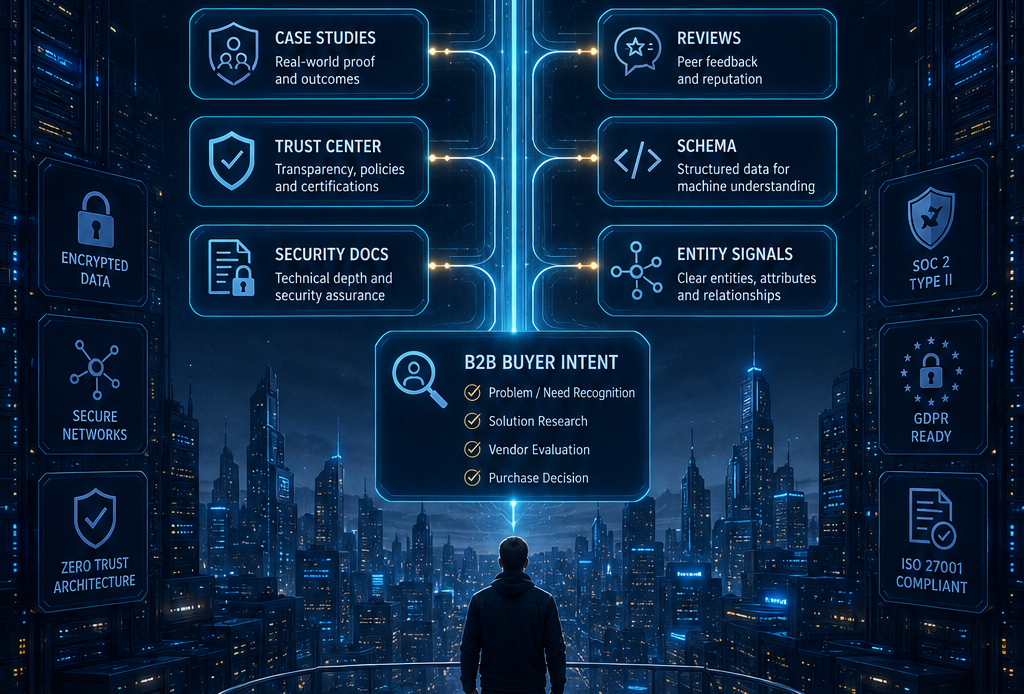
Security buyers use AI search more aggressively than most, and differently. Senior decision makers CISOs, VPs of Security, security architects are among the most active AI users for vendor evaluation, because they face complex, high stakes, multi vendor decisions. The defining cybersecurity behaviour is the stack query: rather than asking about one tool, buyers ask the AI to design an entire security architecture, prompting it to recommend five to eight vendors at once. That is a single interaction with five to eight pipeline opportunities attached and it rewards vendors whose content explains not just what their product does, but precisely where it fits in a broader security stack.
The collapsed funnel
The classic B2B funnel awareness, then consideration, then decision, each a separate stage with its own touchpoints has collapsed into single AI interactions. A buyer can move from “what is SASE” to “best SASE vendor for a 500 person financial services firm needing SOC 2” to a comparative shortlist in one multi turn conversation, often three to five turns deep, without leaving the chat. There is no longer a tidy sequence of campaigns to intercept; there is one compressed moment where category education, vendor discovery and shortlisting happen together. For marketing teams, this means the old model of nurturing a buyer across stages no longer maps to how the decision actually unfolds; the content has to win all three jobs in the same answer, because the buyer experiences them as one.
This collapsed funnel should be handled as part of a broader digital marketing strategy, because AI visibility, organic search, brand authority and conversion pathways now work together rather than separately.
The scale is already enormous
This is not a fringe behaviour confined to early adopters. For a single enterprise security company, more than 12,000 cybersecurity keywords have been found to now trigger Google AI Overviews fundamentally changing the search results dynamics for an entire category at once. When tens of thousands of the exact queries your buyers type now resolve into an AI generated answer rather than a list of links, the question is no longer whether to invest in AI visibility but how much ground you have already ceded while treating it as optional.
The Cybersecurity Trust Problem in AI Search
Cybersecurity faces a harder version of the GEO challenge than most categories, because the stakes of a wrong answer are high and AI engines treat the subject accordingly.
Security is held to a higher evidentiary bar
AI engines apply heightened scrutiny to consequential topics the same instinct Google encodes in its “your money or your life” standards. For security claims, that means strict entity validation and semantic accuracy outweigh stylistic polish. Research on cited content for high stakes subjects found that the overwhelming majority of cited articles around 88% featured deeply structured, nested tables, because engines lean hard on verifiable, well organised data when being wrong carries real cost. A vendor asserting threat detection efficacy or compliance coverage in vague prose will be passed over for one that presents the same claim as structured, sourced, specific evidence.
Why most security vendors are invisible
The scale of the gap is stark. A February 2026 cybersecurity specific benchmark analysing 100 vendors across six AI platforms found that roughly 73% received zero citations from ChatGPT when buyers asked for vendor recommendations in their category. Meanwhile, around 48% of ChatGPT citations in that study came from Wikipedia, with most vendor owned content not being cited at all. The lesson is uncomfortable but clarifying: pouring effort into more brand owned blog posts, while ignoring entity infrastructure and third party validation, is optimising the one input AI engines weight least.
The earned media reality
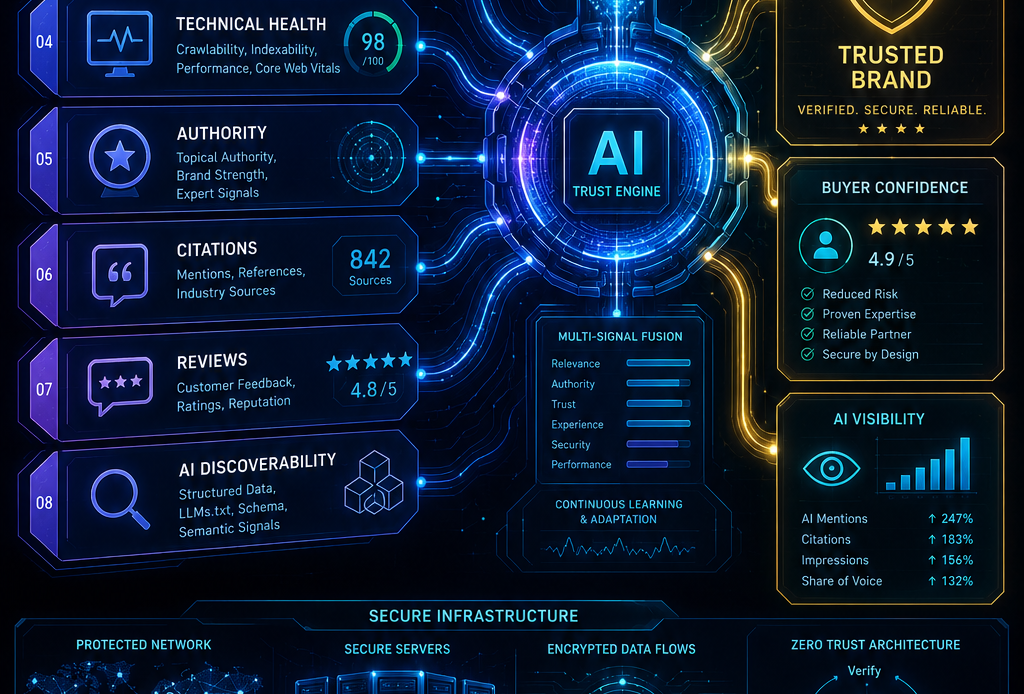
This is the single most important strategic fact for security brands. An analysis of more than a million AI prompts found that over 85% of non-paid AI citations originate from earned media sources, and an Ahrefs study of ChatGPT citation behaviour found that around 65% of its top cited pages come from very high authority domains. Authority built through earned media over time is the dominant factor in AI citation selection. For security vendors, that means analyst coverage, respected trade publications, and credible third party validation are not a PR nicety running parallel to your content; they are the core of your AI visibility.
Where this should redirect your budget
The implication for spend is uncomfortable for many marketing teams, because it inverts the usual ratio. If most vendor owned content is not cited, and most citations come from earned media and high authority third parties, then a content programme that is 90% brand owned blog production and 10% earned media is optimising backwards. That does not mean stop publishing your own pages still need to be the citation first, fact dense, structured sources an engine reaches for once it trusts you. It means rebalancing: pairing every cornerstone content asset with deliberate earned media and entity work so the trust signals exist to make that content citable in the first place. Content without authority is a beautifully structured page no engine has any reason to repeat.
This rebalancing also supports a long term marketing growth strategy because machine readable trust makes a brand easier to discover, verify, cite and choose across both traditional search and AI generated answers.
The B2B Cybersecurity GEO Playbook
Four phases, sequenced. Phases 1 and 2 make you eligible and extractable; phases 3 and 4 make you trusted and measurable. Skipping ahead to content without the foundation is the most common and most expensive error.
Phase 1: Fix the foundation and get eligible
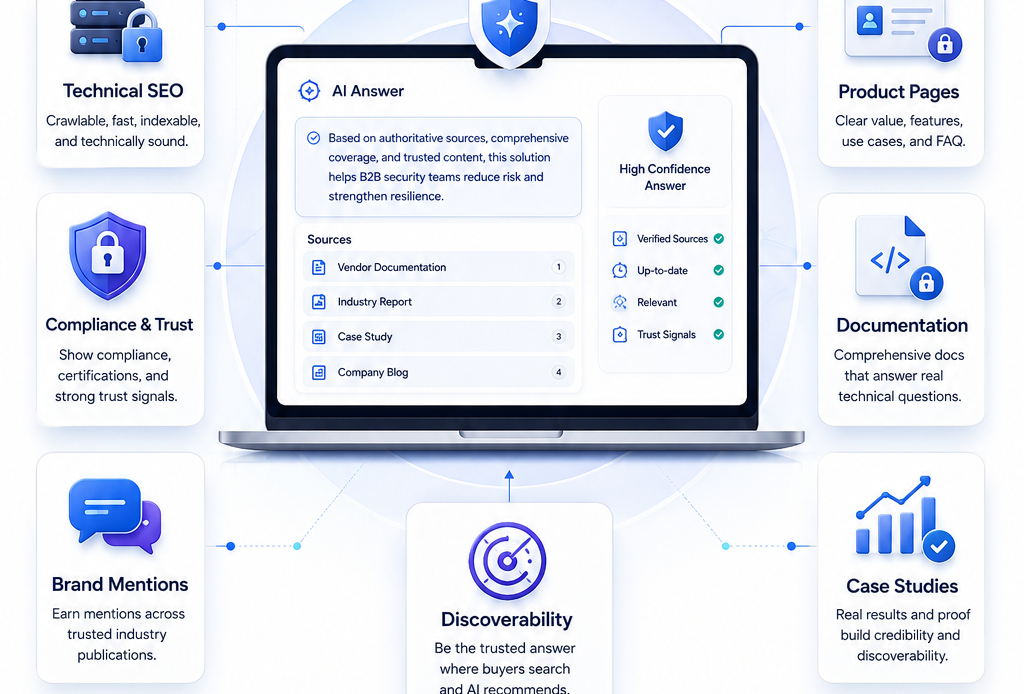
Before anything else, confirm you can be found and parsed. Allow AI crawlers GPTBot, ClaudeBot, PerplexityBot, GoogleOther in robots.txt and at the firewall and CDN level. Get indexed in Bing, since ChatGPT and Copilot retrieve from it and lead enterprise AI referral traffic. Serve core content as static, server rendered HTML rather than client side JavaScript, given the wide gap in how reliably each is parsed. Implement Organization, Article, FAQPage and Author schema, and ensure it matches your visible content. None of the later phases work until this one passes; a blocked crawler outranks every content investment you could make.
Phase 2: Build citation first technical content
Security buyers and the engines serving them reward specificity. Restructure cornerstone pages to lead with a direct answer, then support it with fact density of roughly one verifiable statistic, named entity or specific date per 100 words the techniques the Princeton GEO research found lift visibility by up to 40%. Critically for this audience, produce stack fit content: pages that explain exactly where your product sits in a broader security architecture, which tools it integrates with, and which buyer profiles it suits. This is what gets you named in the “design my security stack” queries that recommend multiple vendors at once. Use structured comparison tables for capabilities, compliance coverage and integrations the format engines preferentially cite on trust sensitive topics.
Phase 3: Establish entity authority and earned media
This is where security brands win or lose, and where on page work cannot help you. Build your entity footprint: a Wikipedia or Wikidata presence, consistent naming across the web, Organization schema with sameAs links to every official profile, and named authors with genuine security credentials carrying Person schema. Then pursue the earned media that supplies over 85% of AI citations: analyst recognition, contributed articles and coverage in respected security trade publications, customer reviews on the platforms engines read, and authentic presence in the communities your buyers trust. For Perplexity in particular, Tier 1 publications and genuine community participation carry structural advantages. This phase is slow, which is exactly why it is defensible competitors cannot buy their way past it overnight.
Phase 4: Measure across the multi prompt journey
Traditional analytics cannot see AI mediated research, so you need a dedicated measurement layer. Track mention rate, citation rate and share of model across all six major engines ChatGPT, Copilot, Gemini, AI Overviews, Perplexity and Claude because visibility on one does not predict another; citation volume for the same brand can differ enormously between platforms, and only around 11% of domains are cited by both ChatGPT and Perplexity. Measure the full multi prompt journey, not single citations, since security buyers run multi turn conversations across several phases. Use the Bing AI Performance report, Google Search Console’s AI Overview filter, and a cross platform AI visibility tracker, then tie the data to pipeline.
Measuring Pipeline Impact
The reason this matters commercially is that AI sourced demand is not just larger it is dramatically higher quality. The numbers reframe the entire investment case.
| Metric | Traditional organic | AI search |
|---|---|---|
| Conversion rate | ~2.8% | ~14% (up to ~17% on some engines) |
| Relative conversion | Baseline | ~5x traditional organic |
| Time on site | Baseline | ~68% longer |
| Buyer intent at arrival | Mixed | Pre qualified by the engine |
| Role in shortlist | One of many results | Often decides the shortlist itself |
Figures are rounded public research benchmarks for orientation; conversion varies by engine, category and offer.
Why a single citation can justify the programme
In a high ticket security or B2B sale, where one closed deal can exceed a year of marketing spend, the maths is decisive. AI search traffic has been found to convert at several times the rate of traditional organic around 14% versus under 3% and AI referred visitors spend materially longer on site, because the engine pre qualifies them before they ever arrive. You are not optimising for traffic volume; you are optimising for presence at the exact moment a qualified buyer is assembling their shortlist. A single citation in the right “best vendor for” query can seed a pipeline opportunity worth more than an entire quarter of low intent organic clicks.
Tie the chain to revenue your board understands
Translate AI visibility into the language of pipeline: visibility leads to citations, citations lead to pre qualified visits, pre qualified visits lead to opportunities and influenced pipeline. Maintain a simple dashboard that follows that chain from share of model through to assisted conversions and branded demand. For a CISO facing brand, framing it this way also disarms the natural objection that AI visibility is unmeasurable: it is measurable, it is just measured differently, and the brands tracking citation frequency across platforms hold a structural advantage over those still guessing.
For businesses that receive enquiries by phone after being discovered through AI search, branded search, organic search or answer surfaces, an AI receptionist can help manage missed calls, route questions and support faster follow up.
Notes for Specific B2B Segments
The playbook holds across B2B technology, but three segments have wrinkles worth naming.
MSPs and managed security providers
Managed service providers sell trust and breadth rather than a single product, which maps unusually well to the stack query. When a buyer asks an AI to design or manage a complete security posture, MSPs that publish clear content on the stacks they manage, the compliance frameworks they cover, and the buyer profiles they serve become natural recommendations. The lever for MSPs is specificity: not “we provide managed security,” but “we manage SOC 2 and Cyber Essentials compliance for 50–500 seat firms on a Microsoft stack.” That precision is what an engine can match to a buyer’s exact prompt.
For service based and local providers, this kind of entity and service clarity can strengthen local business growth signals and help increase business performance by making the brand more recognisable across search engines, AI engines and trusted third party sources.
Early stage and challenger security vendors
Challengers have a structural advantage in GEO that they lack in traditional SEO. Because AI citation rewards specificity and earned trust rather than sheer domain size, a focused vendor with original data and genuine analyst or community recognition can be cited alongside incumbents the Princeton research found the largest visibility gains went to pages that were not already dominating search. The fastest path for a challenger is a sharp niche, proprietary benchmark data, and concentrated earned media in the few publications and communities its buyers actually trust, rather than trying to out publish established players.
Marketing leaders and CMOs
For the marketing leader, the hardest shift is organisational: AI visibility sits awkwardly between content, PR, technical SEO and product marketing, and falls through the cracks when no one owns it end to end. The playbook above only works if one function is accountable for share of model and empowered to commission technical fixes, content and earned media together. Aligning marketing and sales on what buyer prompts look like, what the AI is surfacing, and whether the brand is structured to support that invisible research phase is itself a competitive act most competitors have not done.
Readers who want a deeper framework for AI SEO, GEO, AEO, B2B visibility, cybersecurity search strategy, machine readable trust and modern search growth can explore the High 5 Guru books page. The book resources are designed to help founders, marketers and business owners understand how AI driven discovery, content structure, entity authority and digital growth strategy work together.
Frequently Asked Questions
Written to be lifted directly by AI engines and mapped one to one to FAQPage schema.
Why does AI search matter for B2B and cybersecurity brands?
B2B and cybersecurity buyers increasingly begin vendor research inside AI engines, which assemble the shortlist before any website visit or sales call. By 2026 around 94% of B2B buyers use AI in their purchase process, and Forrester found generative AI is now the single most meaningful source of vendor research, outranking vendor websites and sales reps. Brands absent from AI answers are eliminated from consideration silently.
What content do cybersecurity brands need to get cited by AI?
For trust sensitive security topics, AI engines favour strict entity validation, semantic accuracy and structured data. Research found around 88% of cited high stakes articles featured deeply structured tables. Security brands need citation first content with high fact density, structured comparison tables for capabilities and compliance, and “stack fit” pages explaining exactly where their product fits in a broader security architecture the content that wins multi vendor “design my security stack” queries.
Why are most cybersecurity vendors invisible in ChatGPT?
A February 2026 benchmark of 100 cybersecurity vendors found roughly 73% received zero ChatGPT citations when buyers asked for category recommendations, while around 48% of citations came from Wikipedia. The cause is usually weak entity signals and a lack of earned media rather than poor content. Over 85% of AI citations come from earned media sources, which most vendors under invest in while over producing brand owned blog posts.
Are AI referred visitors more valuable for B2B?
Yes, substantially. AI search traffic has been found to convert at around 14% versus under 3% for traditional organic roughly five times the rate with some engines higher still, and AI referred visitors spend around 68% longer on site. The engine effectively pre qualifies the visitor before arrival, so even modest citation gains on high intent queries can produce outsized pipeline for high ticket B2B and security sales.
How do B2B brands prove ROI from AI search optimization?
Track AI specific metrics traditional analytics miss: mention rate, citation rate and share of model across all six major engines, measured over the full multi prompt buyer journey rather than single citations. Then tie the chain to pipeline visibility to citations to pre qualified visits to influenced opportunities. Because AI referrals are high intent, this chain connects directly to revenue a board understands.
What is a security stack query and why does it matter?
A security stack query is when a buyer asks an AI to design an entire security architecture for example, “design a complete security stack for a 500 person SaaS company.” These prompts recommend five to eight vendors at once, making them high value pipeline opportunities. Vendors win inclusion by publishing content that explains precisely where their product fits, what it integrates with, and which buyer profiles it suits.
Should cybersecurity brands optimize for ChatGPT or Perplexity first?
Start with ChatGPT, since it leads enterprise AI adoption and referral traffic and retrieves from Bing, but does not stop there citation volume for the same brand can differ enormously between platforms, and only around 11% of domains are cited by both ChatGPT and Perplexity. A complete programme covers all six major engines, because security buyers move across several during multi turn research.
How much earned media do cybersecurity brands need for AI visibility?
Earned media is the dominant lever: over 85% of non paid AI citations originate from earned media, and around 65% of ChatGPT’s top cited pages come from very high authority domains. Security brands should prioritise analyst recognition, coverage in respected trade publications, customer reviews on platforms engines read, and authentic community presence treating earned media as core AI visibility infrastructure, not optional PR.
How long does B2B AI search optimization take to work?
Technical and content fixes can improve eligibility within weeks, but the earned media and entity authority that drive most citations compound over months, typically a 9–12 month horizon for durable share of model. This slowness is also the moat: because authority cannot be bought overnight, brands that start now build a defensible position competitors struggle to dislodge later.
What’s the biggest mistake B2B brands make with AI search?
Producing more brand owned content while ignoring the two signals AI engines weight most: entity authority and earned media. Most vendor owned pages are not cited at all, and citations skew heavily toward Wikipedia, high authority domains and earned media. The fix is rarely more blog posts; it is fixing technical eligibility, building entity infrastructure, and earning third party validation then measuring share of model to prove it.
Is your security brand in the answer or invisible? With 73% of cybersecurity vendors earning zero ChatGPT citations, most are absent from the shortlist before they know it. High 5 Guru specialises in GEO for B2B and cybersecurity brands. We audit your share of model across every engine and build the citation first content, entity signals and earned media strategy that get you named. Book at high5guru.com.
Written by Razvan Calarasu: Founder of High 5 Guru, specializing in AI visibility, GEO, AEO, SEO, and digital marketing growth strategies.
Is your security brand in the answer or invisible? With 73% of cybersecurity vendors earning zero ChatGPT citations, most are absent from the shortlist before they know it. High5Guru specialises in GEO for B2B and cybersecurity brands we audit your share of model across every engine and build the citation first content, entity signals and earned media strategy that get you named. Book at high5guru.com.
Continue Reading
- What Is Generative Engine Optimization (GEO)? The Complete 2026 Definition & Framework
- The GEO Audit: 27 Signals AI Engines Use to Decide If They Can Trust Your Brand
- Gemini, Perplexity & ChatGPT: How Each AI Engine Decides Who to Cite
- AI SEO Agency vs Traditional SEO Agency: What’s the Difference in 2026?
High 5 Guru Machine Readable Trust · www.high5guru.com
